Solar stoves use sunlight to heat and cook food without gas or electricity. They can be useful in sunny locations, especially for people looking to reduce household fuel consumption.
How Do Solar Stoves Work?
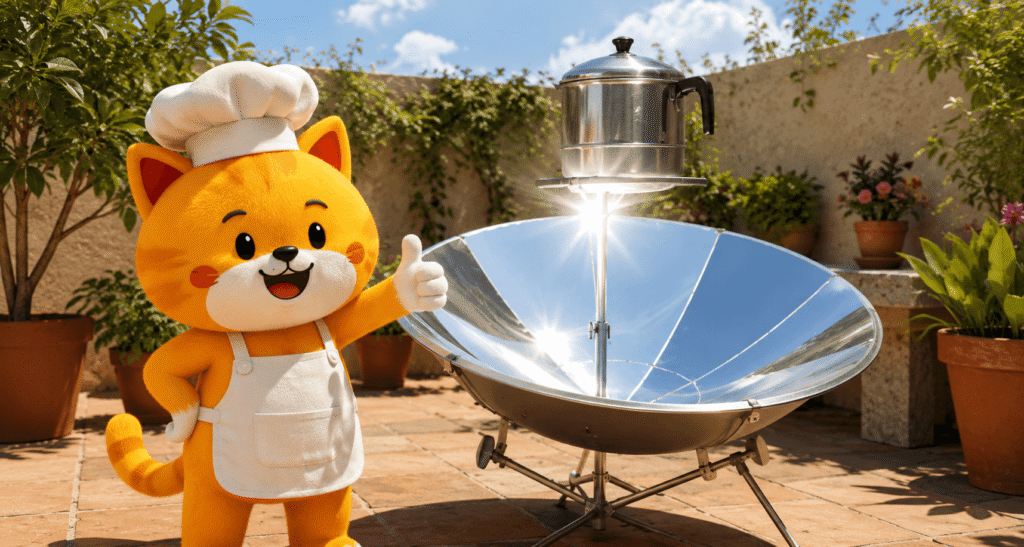
A solar stove captures sunlight and converts it into heat. Parabolic models use a large reflective dish that concentrates sunlight onto a cooking pot placed near the center.
Because the reflected light is highly concentrated, these stoves can reach temperatures suitable for boiling water, frying food and preparing complete meals.
Can a Solar Stove Reduce Gas Consumption?
A solar stove can reduce how often you use a traditional gas stove, but it will not completely replace it in most homes.
The potential savings depend on:
- The amount of sunlight available
- How frequently the stove is used
- The type and size of meals prepared
- Local gas prices
Families that cook during sunny daytime hours may notice greater savings than those who normally prepare meals at night.
What Can You Cook?
Depending on the model and weather conditions, a solar stove can be used to prepare:
- Rice, vegetables and soups
- Beans and stews
- Meat and fish
- Bread or simple baked foods
- Hot water and beverages
Parabolic stoves generally cook faster than basic solar box ovens because they concentrate more heat in a smaller area.
How Long Does Cooking Take?
Cooking times vary according to sunlight intensity, wind, food quantity and stove design. Some meals may take a similar amount of time as conventional cooking, while others can take considerably longer.
The stove may also need to be repositioned periodically so that it continues facing the sun.
Main Advantages
Solar stoves do not require fuel while sunlight is available. They also produce no smoke during use and can help keep heat outside the home instead of warming the kitchen.
They may be especially practical for rural areas, camping, outdoor cooking or places where gas delivery is expensive or unreliable.
Important Limitations
Solar cooking depends heavily on the weather. Performance decreases on cloudy days, during strong winds and near sunset. It is also unavailable at night.
Parabolic models can become extremely hot and may cause burns or eye injuries if used incorrectly. Children and pets should remain away from the concentrated light, and users should avoid looking directly at the reflective focal point.
Is a Solar Stove Worth It?
A solar stove can be worthwhile as a complementary cooking method. It may help lower gas use over time, but the actual benefit depends on the local climate and how regularly it is used.
For homes in sunny regions, it can provide a practical way to prepare some meals without consuming gas. However, keeping a conventional stove available remains necessary for cloudy days, nighttime cooking and foods that require more precise temperature control.