
As desktop gaming and immersive virtual reality continue to converge, Valve is expanding its hardware strategy beyond the Steam Deck. The company has officially introduced Steam Frame, a wireless VR headset designed around game streaming, SteamOS, and access to the broader Steam library.
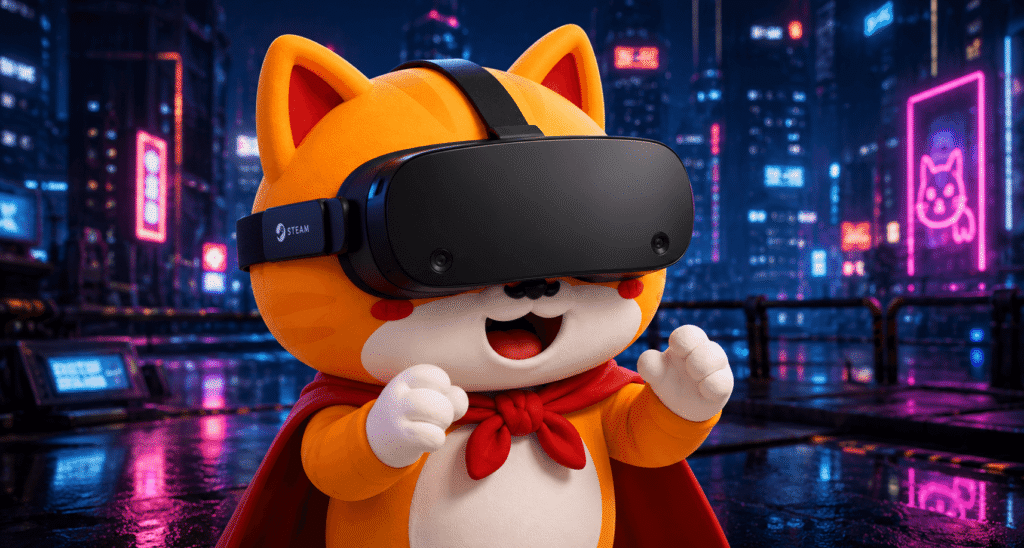
Unlike traditional VR headsets that require a constant tether to a high-end gaming rig, this new device aims to bring the full power of the Steam ecosystem into a standalone, wireless form factor. But what makes this hardware so anticipated, and how is it shaping up to change the way we play? Let’s break down the core details.
Unlike traditional PC VR headsets that rely on a permanent wired connection, Steam Frame is designed to offer greater flexibility. It can stream demanding games from a compatible gaming PC while also supporting standalone functionality directly on the headset. But what exactly is Steam Frame, and how could it change the way Steam users experience both VR and traditional games?
1. What Is Steam Frame?
Steam Frame is Valve’s upcoming wireless VR headset and part of the company’s expanding Steam Hardware family.
The device runs SteamOS, Valve’s gaming-focused operating system, and is primarily designed for high-quality wireless game streaming. It also functions as a standalone computer, allowing compatible software to run directly on the headset without relying entirely on another PC. Valve has also indicated that the headset is intended to support access to a broad range of Steam games, including immersive VR experiences and traditional flat-screen titles displayed in a virtual environment.
Compared with the older Valve Index, which was built around a wired PC VR setup, Steam Frame emphasizes portability, wireless use, and deeper integration with SteamOS.
2. Key Features
Wireless Game Streaming
Valve describes Steam Frame as a streaming-first headset. Its central purpose is to stream games wirelessly from a compatible gaming computer, reducing the need for a physical cable running between the headset and the PC.
The quality of that experience will still depend on factors such as the local network, the host computer, decoding performance, and latency. Independent testing will ultimately determine how closely the experience compares with wired PC VR.
Standalone Capabilities
Steam Frame is not limited to receiving a video stream. Valve says the device is also a full PC running SteamOS, which gives it the ability to run compatible software directly on the headset.
This hybrid approach could allow users to choose between native standalone operation and streaming more demanding games from another computer.
Access to Traditional and VR Games
Steam Frame is intended to support immersive VR titles while also giving users a way to play traditional games on a large virtual display.
This could make the device useful not only for VR gaming, but also for players who want a private virtual-screen experience for standard Steam games.
SteamOS Integration
Because the headset runs SteamOS, users can expect close integration with the Steam interface, game library, cloud saves, friends list, and store.
Valve is also expanding its Verified program to include Steam Frame, which should help users identify which games are suitable for standalone use or streaming on the headset.
3. How It Compares With the Competition
The standalone VR market has largely been shaped by Meta’s Quest lineup, which emphasizes mobile hardware, self-contained apps, and a dedicated VR ecosystem.
Steam Frame appears to take a different approach. Rather than building primarily around a separate mobile storefront, Valve is positioning the headset as an extension of the existing Steam platform.
That could make it especially attractive to PC gamers who already own large Steam libraries and want a headset capable of supporting both standalone software and higher-end streaming from a gaming PC.
However, its real competitiveness will depend on several details that still require careful evaluation, including:
- Final price
- Battery life
- Display quality
- Weight and comfort
- Wireless latency
- Standalone game compatibility
- Controller tracking
- Performance in demanding VR titles
4. What It Means for PC Gamers
For Steam users, Steam Frame could reduce one of the biggest barriers to PC VR: the inconvenience of cables and complicated setup.
Players may be able to move more freely while streaming games from a desktop PC, while also using the headset independently for compatible software.
However, Steam Frame should not be treated as a complete replacement for a high-end gaming PC. More demanding titles may still depend on a separate computer for rendering and streaming.
Its main value is flexibility: users may be able to choose between standalone operation, wireless PC streaming, immersive VR, and traditional games displayed on a virtual screen.
Conclusion
Steam Frame represents a significant expansion of Valve’s hardware ecosystem. By combining SteamOS, wireless game streaming, standalone processing, VR support, and access to traditional Steam games, the headset aims to bridge the gap between PC gaming and self-contained spatial computing.
Several important details, including final pricing, release timing, battery life, and real-world streaming performance, will determine how successful it becomes. Even so, Steam Frame has the potential to become one of Valve’s most important hardware products since the Steam Deck.